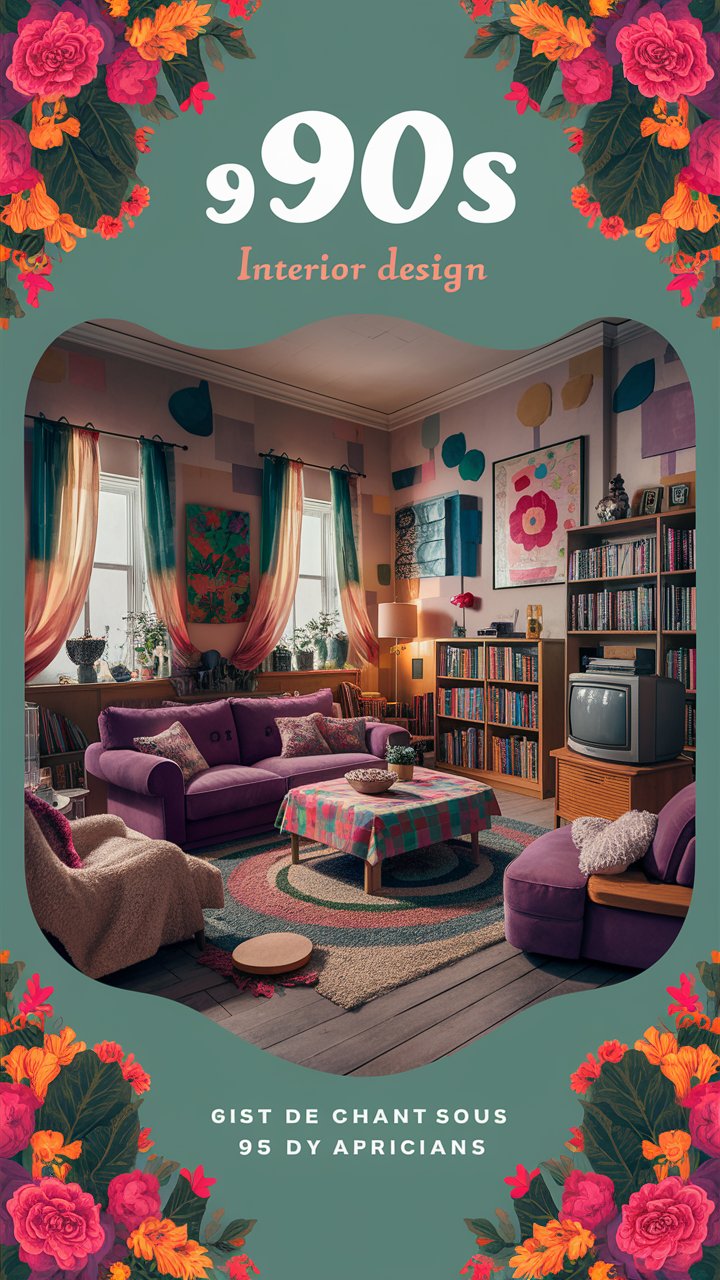
Remember the cozy glow of track lighting, plaid couches, and floral wallpaper that once defined home interiors? The 1990s were more than just a memorable fashion era—they were a bold time in home design. Whether you lived through it or simply love a touch of retro charm, 90s interior design offers a treasure trove of inspiration.
As we revisit these nostalgic design elements, you’ll find that many 90s styles are making a comeback—with a modern twist. From pastel hues to practical open shelving, this era was all about comfort, personality, and expressive spaces. Let’s take a deep dive into 27 adorable 90s interior design ideas that you’ll definitely want to bring back.
Table of Contents
- Floral Upholstery and Wallpaper
- Muted Earth Tones
- Track Lighting
- Plaid Patterns
- Open-Shelving in Kitchens
- Leather Furniture
- Wallpaper Borders
- Light Wood Finishes
- Shabby Chic Decor
- Faux Finish Walls
- All-White Kitchens
- Glass Block Walls
- Ceiling Fans with Character
- Neon and Pastel Accents
- Arched Doorways and Windows
- Bean Bag Chairs
- Minimalist Scandinavian Touches
- Wall-to-Wall Carpeting
- Southwestern Influences
- Matching Furniture Sets
- Vertical Blinds
- Futons
- Sculptural Wall Art
- Bamboo and Rattan Revival
- Hunter Green Accents
1. Floral Upholstery and Wallpaper
In the 1990s, floral patterns were a staple in home design—gracing everything from sofas to wallpaper. The look was soft yet expressive, bringing warmth to living rooms and bedrooms alike.
Today, you can revive this trend by opting for floral accent chairs, wallpapered entryways, or even floral cushions that nod to the past without overwhelming your space.
Pro Tip: Keep the color palette fresh by mixing in neutrals or muted greens for balance.
2. Muted Earth Tones
Gone were the neon explosions of the 80s; the 90s welcomed grounded, nature-inspired hues. Think terracotta, taupe, beige, and dusty olive tones. These calming colors brought a sense of serenity to every room.
To modernize this palette, pair earth tones with natural materials like jute rugs, linen curtains, and reclaimed wood furniture.
3. Track Lighting
Track lighting was a sleek, adjustable solution that lit up many 90s kitchens and living spaces. The appeal? It allowed focused lighting for art, seating areas, and workspaces.
Today’s updated track lighting options come in matte black, brushed nickel, and even brass, making it easy to integrate this functional element into contemporary spaces.
4. Plaid Patterns
Plaid wasn’t just for grunge flannel—it made a significant impact in interior design. From drapes to upholstery, plaid brought texture, coziness, and a hint of countryside charm.
Pair plaid throws or cushions with solid color furniture for a touch of nostalgia that feels fresh and balanced.
5. Open-Shelving in Kitchens
The open-shelving concept was both stylish and practical in the 90s, allowing homeowners to showcase pretty dishware and glassware.
You can recreate this look with floating wood shelves, potted herbs, and carefully arranged kitchen essentials. It promotes airiness and encourages neatness—a win-win.
6. Leather Furniture
Leather sofas and armchairs were status symbols in the 90s, often appearing in masculine tones like deep brown or black.
Today, tan and caramel leathers are making a return in sleeker silhouettes. A single leather piece can elevate your space with timeless charm.
7. Wallpaper Borders
Wallpaper borders often featured floral vines, fruits, or country scenes. While full walls might feel dated, reintroducing borders in small ways—like above wainscoting—adds nostalgic charm.
Use them in guest bathrooms, dining rooms, or kids’ spaces for a subtle vintage flair.
8. Light Wood Finishes
Forget dark mahogany—blonde woods like birch, maple, and ash dominated 90s homes. These light finishes made rooms feel open and bright.
You can blend this trend with Scandinavian minimalism for a serene, organic vibe in any room.
9. Shabby Chic Decor
The 90s made “distressed” stylish, especially under the umbrella of shabby chic. Think whitewashed furniture, lace accents, and vintage finds.
Modern updates include neutral palettes, curated antique pieces, and layering with natural textures like linen, cotton, and wood.
10. Faux Finish Walls
Faux finishes like sponge painting and rag rolling were all the rage in 90s homes. These techniques added texture and depth, giving flat walls some artistic edge.
Today, consider soft plaster finishes or limewash paints to mimic that depth with more modern refinement.
11. All-White Kitchens
Clean, simple, and versatile—the all-white kitchen trend really gained ground in the 90s. It offered a fresh canvas and reflected natural light beautifully.
Modern updates include matte white cabinetry, quartz countertops, and mixed-metal fixtures for warmth and sophistication.
12. Glass Block Walls

Glass block walls were iconic, especially in bathrooms or between living spaces. They allowed light to filter through while offering privacy.
They’re back—in smaller doses. Think shower walls, bar dividers, or decorative nooks that play with light and shadow.
13. Ceiling Fans with Character
Functional yet decorative, ceiling fans in the 90s featured ornate finishes or wood accents. They offered comfort without compromising aesthetics.
Modern fans come in sleeker designs, quieter motors, and energy-saving modes, but the 90s inspiration remains strong.
14. Neon and Pastel Accents
The 90s were nothing if not colorful. Neon pink, mint green, lavender, and electric blue popped up in decor, lighting, and art.
Balance is key—use pastels as base colors and neon in small accents, like artwork or throw pillows, to create an inviting space.
15. Arched Doorways and Windows
Soft curves were everywhere in the 90s, from architecture to furniture. Arched doorways and windows added elegance and a Mediterranean flair.
Modern designs integrate arches in entryways, mirrors, and shelving niches for a sophisticated yet subtle throwback.
16. Bean Bag Chairs
The ultimate symbol of comfort and informality—bean bags were perfect for teen rooms, dorms, and TV lounges.
Today’s bean bags come in premium fabrics like velvet, faux fur, and leather, making them fun, fashionable, and family-friendly.
17. Minimalist Scandinavian Touches
Minimalism didn’t start with millennials—the 90s explored it through Scandinavian influences. Think clean lines, neutral palettes, and functional furniture.
This trend still thrives today, with sustainable materials and airy layouts helping homes feel light, calm, and connected to nature.
18. Wall-to-Wall Carpeting
A staple of 90s comfort, wall-to-wall carpet was everywhere—from bedrooms to living rooms. It added warmth, muffled sound, and felt soft underfoot.
Modern iterations favor eco-friendly materials and low-pile styles, making carpets cozy without trapping dust or allergens.
19. Southwestern Influences
Navajo patterns, terracotta tiles, and rustic woods were prominent in 90s homes, especially in the Southwest U.S.
To bring this vibe into your home, think woven textiles, desert-inspired art, and clay-toned color palettes with natural light.
20. Matching Furniture Sets
Matching sofas, coffee tables, and side chairs were the norm. It gave homes a sense of cohesion—sometimes too much.
Today’s version? Mix pieces within the same color family or finish. This keeps things coordinated without feeling like a furniture showroom.
21. Vertical Blinds
A practical choice in the 90s, vertical blinds adorned sliding glass doors and wide windows. They were functional, easy to clean, and neutral.
For a more modern feel, choose vertical panels in textured fabric or natural materials for a soft, contemporary look.
22. Futons

Futons were the ultimate multi-taskers—sofa by day, bed by night. Perfect for small spaces or guest rooms.
Contemporary futons boast better mattresses, solid wood frames, and stylish upholstery, making them both functional and attractive.
23. Sculptural Wall Art
Metallic wall hangings and abstract forms became focal points in 90s interiors. This trend embraced bold creativity and individuality.
Today, sculptural wall art includes wood carvings, 3D installations, or large metal pieces to bring depth and texture to plain walls.
24. Bamboo and Rattan Revival
Light, airy, and eco-friendly—bamboo and rattan furniture were favorites for sunrooms and patios in the 90s.
They’re back, but now appearing in living rooms, bedrooms, and even kitchens. Pair with neutral upholstery and leafy plants for a relaxed, tropical vibe.
25. Hunter Green Accents
Dark, moody, and elegant—hunter green was a defining color of the decade. Used on walls, upholstery, and accessories, it added richness to interiors.
Bring it back with velvet cushions, statement walls, or cabinetry paired with brass or gold hardware for a timeless, upscale look.
26. Popcorn Ceilings
Popcorn ceilings, also known as “cottage cheese ceilings,” were incredibly common in 90s homes. Originally used for their sound-dampening qualities and to hide imperfections, they added a textured look to ceilings that became synonymous with the era.
Modern Take: While many homeowners now opt to smooth them out, some are embracing subtle ceiling textures in updated forms—like sand-swirled or knockdown textures. If you want a nod to the 90s without going full popcorn, try a lightly textured ceiling paired with sleek lighting fixtures for contrast.
27. Skirted Furniture
Furniture with skirts—especially sofas and chairs—was a cozy, classic hallmark of 90s decor. Skirted bottoms added softness to a room and hid unsightly legs or storage space underneath.
Modern Take: Today’s versions feature tailored, linen skirts that offer an elegant, breezy aesthetic without looking dated. Great for farmhouse, cottage, or coastal-inspired interiors, this style is making a subtle return in both traditional and transitional spaces.
Final Thoughts: Why 90s Style Still Works
The 1990s gave us more than just nostalgic design—it introduced versatile elements that balanced personality with practicality. From cozy florals to sleek minimalism, this decade covered a wide spectrum of tastes and styles.
Reviving 90s interior design isn’t about copying it—it’s about reimagining it. By blending nostalgic charm with modern sensibilities, you can create spaces that are both comforting and contemporary.
So, whether you’re adding a bean bag to your reading nook, layering in earth tones, or bringing back that bold hunter green, remember: the 90s were all about expressing yourself. And in today’s world of over-curated spaces, a little playful charm might be just what your home needs.